
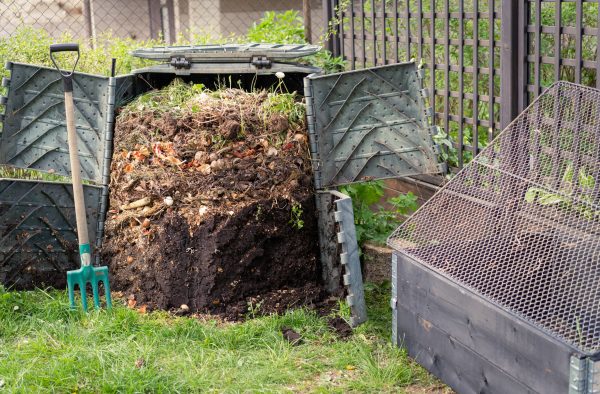
Composting is a great way to utilize kitchen waste and nourish a garden that’s the envy of your neighbors. However, if you’ve thought about composting, that thought was probably quickly followed by wondering how to start a compost pile. Well, this post is here to explain just that and get you started on your compost journey!
How to Start a Compost Pile: The Basics
One of the most important things to understand before you begin composting is layering. Think of your compost as a lasagna—each layer takes up a different space, but they are all important.
The general rule of thumb is to create a compost pile that is at least three feet high and wide with a ratio of 1:2 green and brown materials. Now comes the lasagna:
- Start your pile with a base, about four to six inches, containing coarse materials like sticks and branches. (This should allow for air and liquid to flow through while still providing a solid platform.)
- Next, add a layer about three to four inches deep of brown materials like leaves and wood chips.
- Then, add three to four inches of green materials, like vegetable or produce scraps, to top it off.
- Lastly, repeat your lasagna until the compost is about the right height and width!
When adding to your compost pile, be sure to avoid using meat or dairy products as these can contaminate your compost, as well as attract critters.

Composting at Home
Composting at home is the most convenient way to do it if you have the yard space. Pick out a bin that works for you and find a spot outside where it fits! If you’re planning to use the compost in your garden (and why wouldn’t you?), you may want to pick a spot close by, so you don’t have a long way to haul it. Just be mindful that your compost may attract animals if there is too much green material.
Many people also use a countertop compost pail that they dump in the compost pile when it’s full. The convenience of having a container for compost available in the kitchen helps ensure you will remember to use it. You can really use any type of container to transport your compost, but these special pails have some advantages. They’re reasonably priced, look nice on your counter and include carbon filters that keep odors from wafting through your kitchen.
Children may be curious, and composting can help them learn important lessons, so it’s best to get them involved in the project and educate them on how to safely and correctly contribute.

Small-scale Composting
If you don’t have yard space for a compost bin or you live in an apartment, you can still compost. While you may not be able to have a large bin, there are plenty of space-saving methods to consider:
- Participate in a local community garden project and contribute your kitchen scraps to the project’s compost pile.
- Try out a worm composting bin.
- Use a small compost tumbler.
- Invest in a countertop composter. (Some machines will even turn the mixture for you!)
Now that you know all your options, you’re ready to begin cooking up your very own compost lasagna. Use your kitchen waste, yard waste or even leftover pumpkin carvings to get a head start on your new compost and stay tuned for part 2, which will cover how to maintain your compost pile!