
So, you’ve built and baked your compost lasagna. Each layer is set up and you might have already started adding kitchen waste! Your compost seems to be flourishing, but now what?
There are four major components to remember when maintaining your compost pile:
- Green and brown material balance
- Turning and air balance
- Moisture levels
- Temperature levels
Green and brown material
We touched on the balance of green and brown materials in part one. Green materials are kitchen scraps and plant trimmings, while brown materials are dry leaves and cardboard. When maintaining your compost, you want to keep a ratio of about two parts brown to one part green. This is a great way to help keep the rest of these points in check!
Turning and air
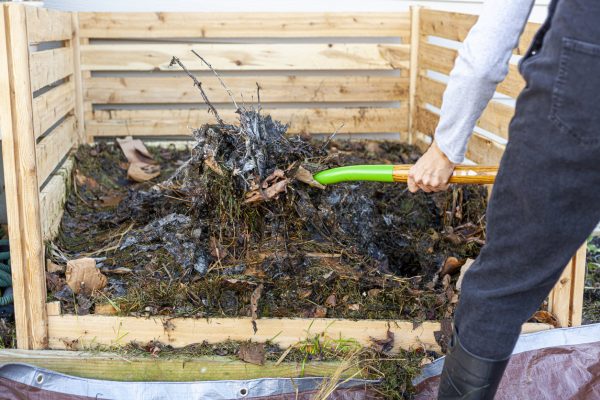
Turning your compost helps introduce more oxygen and break things down so your mixture decomposes evenly—it will also keep odors at a minimum. To get a good balance of air in your mixture, you should turn your pile every one to two weeks.
Moisture
The perfect moisture level allows your compost’s small microbial community to remain active. A good compost pile should feel damp, but not waterlogged.
If your compost pile is outside, protect it from too much rain by covering it. When it’s dry, add water until it feels like it’s at 50-60% moisture.
For indoor compost piles, you may find yourself adding water less or more frequently, depending on the level of moisture in your house or apartment.

Temperature
Managing the temperature of your compost may seem like an abstract or unrealistic goal, but if you follow the steps before this, you’ll already be on the right track! Each step helps produce heat and break down matter so your compost can rest at an ideal 110°- 160°F.
Here are a few more ways to reach your ideal temperature:
- Insulate your compost pile during winter months (or if it is small)
- Keep the compost pile in a sunny or warm location so it can heat up naturally
- Add a more green materials during cooler weather to boost heat production
With these steps in hand, you are in a great spot to sit back and watch your compost turn into nutrient rich soil! In no time at all, you will have the best plants around with the help of compost you made yourself!